


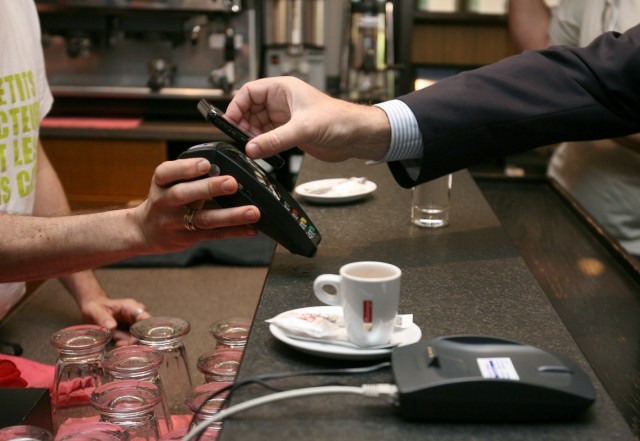
A mobile phone is used to make a payment. AFP/Stephane Danna
Mobile payment is a trend that’s been gaining momentum for the past few years. First tablets and smartphones began functioning as cash registers at the occasional trade show, or perhaps in a taxi where vendors and cab drivers could accept credit card payments in temporary or mobile environments. Then the technology resonated with entrepreneurs and small businesses like kiosk stands, food trucks and farmers market vendors. Soon, pretty much anyone selling anything could use the card reader and app from providers like Intuit or Square, and instead of signing a yearly contract, users simply pay a monthly fee ranging from $12.95 to $275 per month, or a fee from 1.7% to 2.75% per swipe. The services allow customers to sign and receive receipts for their transactions – completely replacing the need for the standard cash register and credit card machine. In 2012, Gartner reported that mobile payments had jumped 62% from 2011 at $171.5 billion worldwide.
The movement is now in full swing ranging from mom-and-pop shops to massive retailers like Nordstrom, which is eliminating cash registers in all 240 of its stores, replacing them with Apple iPod Touches, where sales associates can process payments throughout the store as they assist customers.
While small businesses take advantage of those mobile payment services like Intuit and Square, bigger players have their own applications to process payments. Apple too arms its sales team with its own iPod Touch and card reader to ring up customers, but its retail stores also allow customers to checkout using the Apple Store app. During the company’s earnings call last week, CEO Tim Cook said that mobile payments were “just getting started” and was still “in its infancy.”
As customers are adjusting to this new space in retail – somewhere between the traditional cash register and mobile device checkout – the trend has opened up new opportunities for creative types to offer an aesthetic enhancement to a shop’s interior through the housing of these new tablet cash registers. Shoppers can now see tablets hanging from walls, or even placed in a typical cash register setting – only with a swivel capability to face customers, or a custom-designed enclosure made from materials varying from acrylic, to bamboo.
It would seem as if the traditional cash register, as we know it, is indeed on its way out. The World Payments Report predicts that 15% of all credit card transactions this year will be made via mobile payments, and if the adoption rate continues with its current momentum, this number will jump to 50% in 10 years. Similarly, the Yankee Group estimates that mobile payments will exceed $1 trillion in 2015. With this growth will come new opportunity, as well as continued innovation.


