

Marine Le Pen has revitalized her party after taking over as leader in 2010 by moving it towards the political mainstream.

Marine Le Pen has revitalized her party after taking over as leader in 2010 by moving it towards the political mainstream.
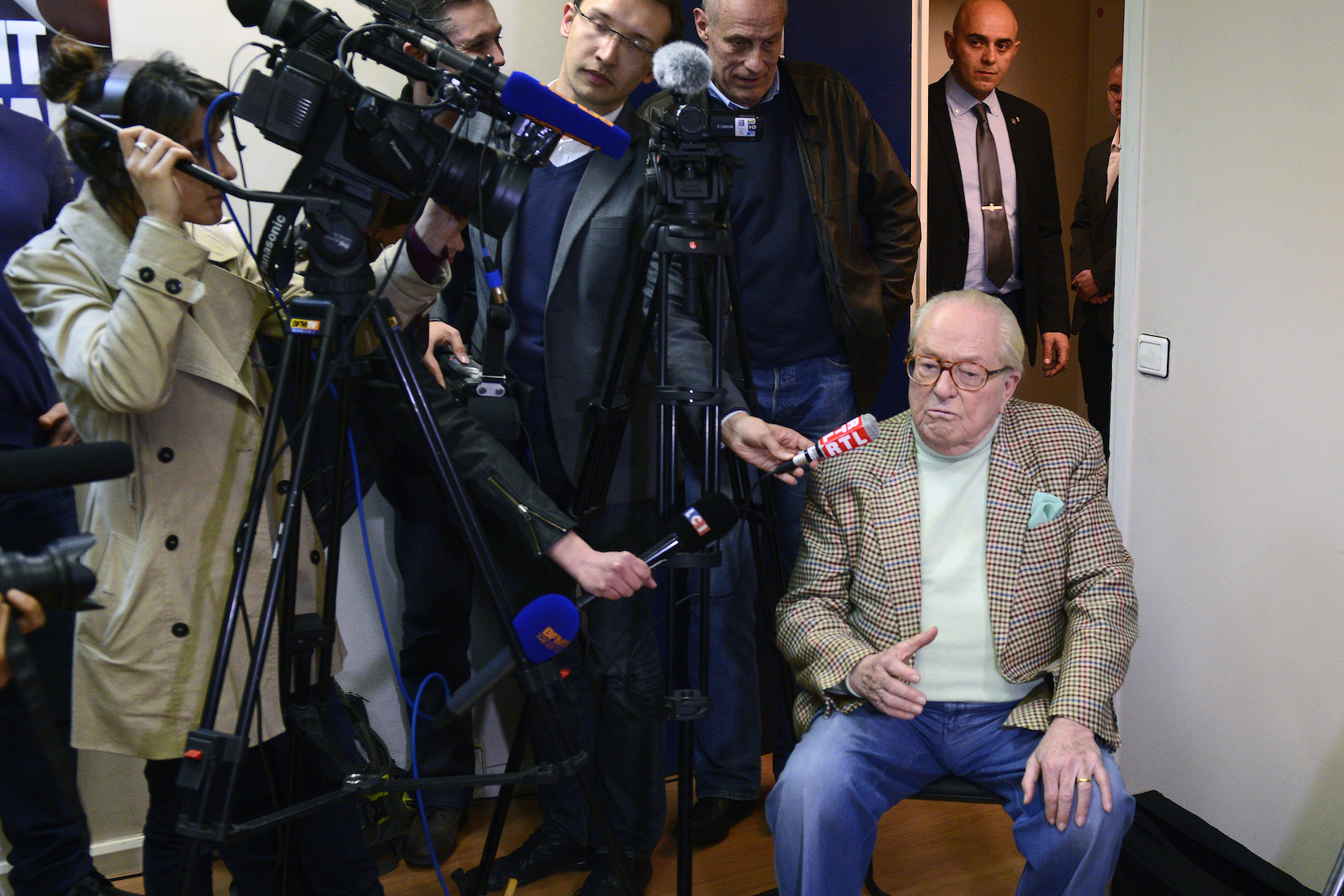
With the pressure mounting on Marine Le Pen to transform her party’s recent electoral victories into tangible progress towards the Elysée Palace in 2017, the elder Le Pen’s timing couldn’t be worse.

Le Pen’s speech is unlikely to curb the FN’s momentum, and sadly, may even boost his bid at a seat in the European Parliament by resonating among his right wing support base.
Le Pen seems to have garnered long sought after credibility for the party with her anti-Brussels (and anti-immigrant) platform.
The FN has a lot riding on its self-dubbed “Marinisation”: acceptance into the political mainstream, gains in municipal elections scheduled for March 2014, and a fighting chance at the presidency in 2017.
The debate on self-defense, while acutely familiar to Americans, is a new one in France.
Party leader Marine Le Pen has attempted to trim the FN of any embarrassing Neo-Nazi elements.
With Le Pen the younger at the helm, in 2012 the Front National saw its most respectable showing yet in a presidential race.
The Front National has proven unable to shed its label as a fringe, or radical, group, thanks namely to an “emperor in new clothes” syndrome: the party has not eschewed its xenophobic tenets, but merely adopted a new target.


