


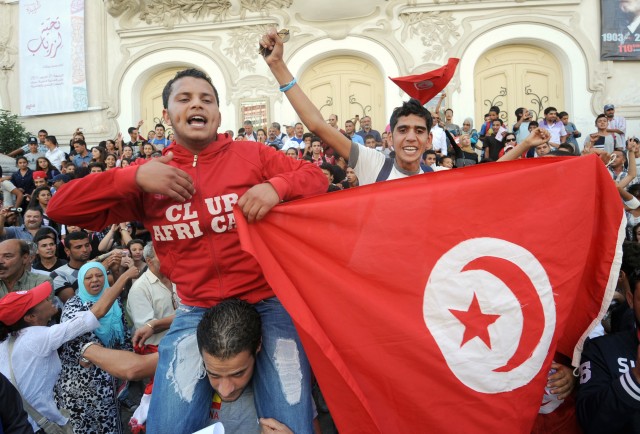
Tunisian young protesters hold a demonstration in Tunis’ on October 23, 2013. AFP PHOTO/ FETHI BELAID
On Thursday, Tunisia’s online voter registration process resumed after hackers launched a “pirate attack,” the latest in a series of hacks. That this attack, at least, was short-lived is encouraging news in light of the challenges hindering preparations for legislative and presidential elections to be held in October and November, respectively – think a months-long political stalemate, a spike in terrorist activity, and ongoing dissent within Tunisia’s National Assembly. Granted, the parliament’s main camps, secularists vs. Islamists, look to have made peace (kind of), finally agreeing on dates for the country’s second election since dictator Zine el-Abidine Ben Ali was ousted in 2011. And voter registration opened on June 22 as scheduled, offering enrollment by text message in an effort to broaden participation.
But frustrated Tunisian voters may not care. With less than two weeks to go until the July 22 deadline, a little less than 150, 000 people have registered, according to the national election board – that’s of an estimated eight million eligible voters. (Note that half that number registered to vote in the 2011 election following Ben Ali’s ouster.) High turn-out is critical this time around. Tunis is looking not only to quell domestic unrest, but also to reassure outside observers, boost foreign investment and tourism, and accelerate Tunisia’s stalled democratic transition. The present challenge is a daunting one: dramatically increase voter registration over the next ten days amid a climate of economic lethargy and widespread public dissatisfaction, not to mention a fractious national assembly. Already, Tunisia’s major political parties are crying foul and demanding a one-month registration extension.
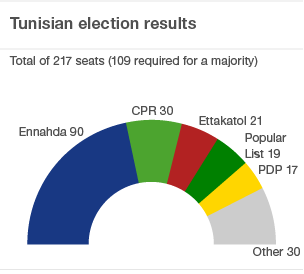
Via: BBC News
Presidential candidate Beji Caid Essebsi, head of the opposition Nidaa Tounes party, warned Thursday that failure to extend the deadline could affect the dual elections’ credibility. The subtext there lies in the difficulties Tunisia’s smaller political parties will face in trying to dethrone Ennahda, the Islamist party that dominated the 2011 elections (see right) and ran the government until being forced to step down in January. Essebsi notes, “We hoped to increase the enrollment to give everyone a chance. [...] The Ennahdha machine is already running.”
Even if the voter enrollment campaign was better funded – its outreach budget is approximately $600,000 — and better organized, i.e., not coinciding with the slow period of Ramadan, it would be hard-pressed to reverse widespread voter apathy. The question remains: what if Tunisia succeeds at holding long-delayed elections, in accordance with the national constitution, but no one shows up?


