
Politics
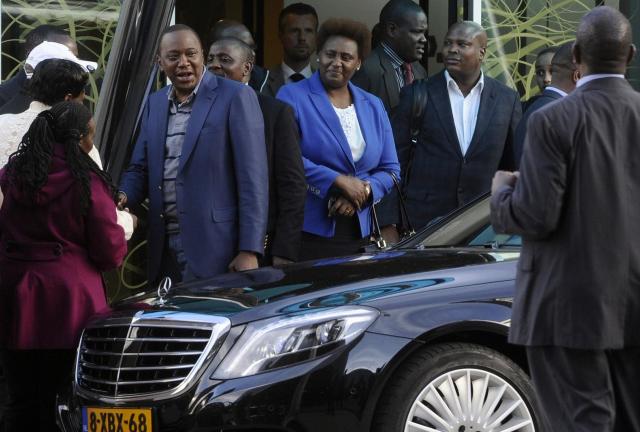
Kenyan President Uhuru Kenyatta has arrived in The Hague ahead of an appearance at the International Criminal Court (ICC) on charges of crimes against humanity on Wednesday. The BBC writes:
He will be the first serving head of state to ever come before the court. The charges concern his role in violence that followed the 2007 elections, in which more than 1,000 Kenyans were killed.
He denies the charges and believes that the case should be thrown out. The ICC has summoned him to explain allegations that evidence against him had been withheld by the Kenyan government - a claim rejected by Kenyan Attorney-General Githu Muigai who appeared before the court on Tuesday.
In September, the court postponed the trial after prosecutors said the Kenyan government had failed to deliver key documents. Witnesses for the prosecution have withdrawn from the case.
Deputy President William Ruto will be acting president while Mr Kenyatta is at The Hague. On Monday, the president again stressed his innocence, saying his conscience was clear.
In a speech to the Kenyan parliament, Mr Kenyatta said that he was going to The Hague in a personal capacity - not as president of the country - so as not to compromise the sovereignty of Kenyans. No special arrangements have been made at the ICC.
The main spokesperson for the court said that Mr Kenyatta would not be treated differently from any other accused person.
While in The Hague, Kenyatta will temporarily step down as president of Kenya. Aljazeera reports:
In a televised address before parliament, Kenyatta said he would invoke a never-before-used article of the constitution that will see Kenya's Deputy President William Ruto temporarily fulfill the top role.
That article stipulates the deputy to fill in when the president is absent, temporarily incapacitated or during any other period of the president's choosing. The temporary abdication of the country's top political job is Kenyatta's way of fulfilling the court order that he attend, but insisting that he be a private citizen during the court hearing and not the first sitting president before the court. "
It is for this reason that I chose not to put the sovereignty of more than 40 million Kenyans on trial since their democratic will should never be subject to another jurisdiction," said Kenyatta.
Kenyatta faces five counts at the Hague-based court over his alleged role in masterminding post-election violence in 2007 and 2008 that left 1,200 people dead and 600,000 displaced.
What began as political riots quickly turned into ethnic killings of Kenyatta's Kikuyu tribe, who in return launched reprisal attacks, plunging Kenya into its worst wave of unrest since independence in 1963.
Had Kenyatta refused to go, as some within his political party have urged him to, he would have risked facing an international arrest warrant as well as international condemnation and possible economic sanctions against Kenya.


